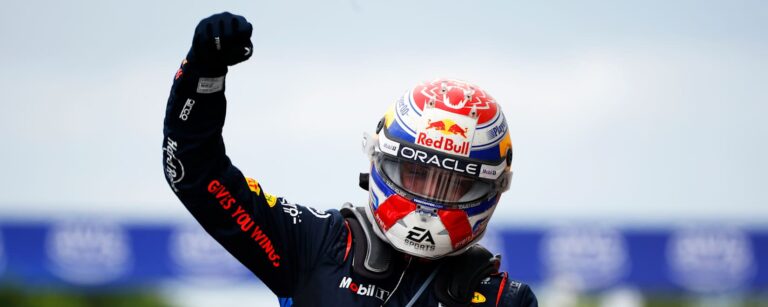
Nelson Piquet — Brazilian, brilliant, ballistic — was a three-time Formula 1 World Champion (1981, 1983, 1987) and possibly the most underestimated great in the sport’s history. While Senna lit candles and Prost solved equations, Piquet leaned back, cracked a joke, and just won anyway. He was a master of setup, a weapon in turbocharged machinery, and a psychological arsonist who could outpace you and rattle you, sometimes in the same sentence.
He was outrageous. He was cruel. He was fast. And he didn’t care if you liked him — as long as he was ahead of you.
Biggest Achievements
- 3× Formula 1 World Champion – 1981, 1983 (Brabham), 1987 (Williams)
- 23 Grand Prix wins and 60 podiums across 207 races
- Won titles with both naturally aspirated and turbocharged cars
- First driver to win a title in a turbo car (1983)
- Raced for Brabham, Williams, Lotus, Benetton
- Beat Nigel Mansell for the 1987 title, in the midst of open civil war at Williams
- One of the most politically cunning and mechanically savvy drivers ever to race
The Chaos Artist: Style, Spite, and the Smirk Behind the Speed
If you built a champion in a lab, he wouldn’t look like Nelson Piquet. He’d be cleaner, sharper, more disciplined. But that’s what made Piquet so dangerous. He didn’t seem like a threat — until he passed you, beat you, mocked you, and was halfway to the airport before you’d found second place.
His driving style? Smooth. Deceptively so. He conserved tires like a monk, turbo-boosted on instinct, and had an almost erotic relationship with car balance. His engineers adored him. His rivals… less so. He understood setup better than almost anyone of his era — and paired it with psychological warfare that could rattle gods.
He once called Nigel Mansell’s wife “ugly.” Repeatedly. He said Senna was “gay,” “a taxi driver,” and “mentally unstable.” He belittled Prost, needled everyone, and meant every word. He was, frankly, a bastard — but one who could wheel a car like the devil on espresso.
The defining drive? Brabham, 1983. The turbo car was a beast — fragile, brutal, barely controllable. But Piquet nursed it across a full season, watching rivals combust around him. At the final race in Kyalami, he drove to third and took the title. A mechanical symphony, led by the smirking conductor.
And then came Williams, 1986–87. The Mansell years. The Hatred Years. Two alphas in one garage. Public snipes. Private sabotage. Piquet took the 1987 title on strategy, consistency, and nerve. He didn’t need to beat Mansell in the spotlight — just in the points.
And he did. With a smile.
The Man Off the Throttle
Piquet was chaos incarnate. Flirted with danger, laughed in press conferences, lived like an off-duty rock star. But he was also sharp — invested in race engineering, owned multiple businesses, later founded his own motorsport empire. He wasn’t mystical like Senna or professorial like Prost — he was a hustler. And he got rich doing it.
After retirement, he stayed active in motorsport, mentored his son Nelson Jr., and even raced in endurance events. Then came the dark turn: the 2008 “Crashgate” scandal, where his son was ordered to deliberately crash to help Alonso win in Singapore. The fallout tainted the Piquet name — but not the elder’s legacy on track.
Career Summary
Piquet debuted in 1978, joined Brabham in ’79, and by ’81 he was champion — the first post-Fittipaldi Brazilian to wear the crown. His second title in ’83 came with a brutal BMW turbo engine and brilliant tire strategy. After Brabham faded, he joined Williams, clashed with Mansell, and still won in ’87.
Lotus in ’88–89 was a graveyard — uncompetitive cars, zero wins. But Piquet reinvented himself yet again at Benetton, taking wins in ’90 and ’91 before retiring in style. A career of survival, sabotage, and sudden brilliance.
Legacy
Nelson Piquet is the unwanted truth of F1 greatness: you don’t have to be noble, or poetic, or universally loved. You just have to be faster, smarter, and more relentless than the guy next to you.
He was the thinking man’s saboteur. A champion built from brains, balls, and banter. He tore through the golden age of F1 with a cigarette in one hand and a middle finger in the other — and walked out with three titles.
In a sport that worships drama and forgets results, Piquet did both. And he made damn sure you never forgot him.