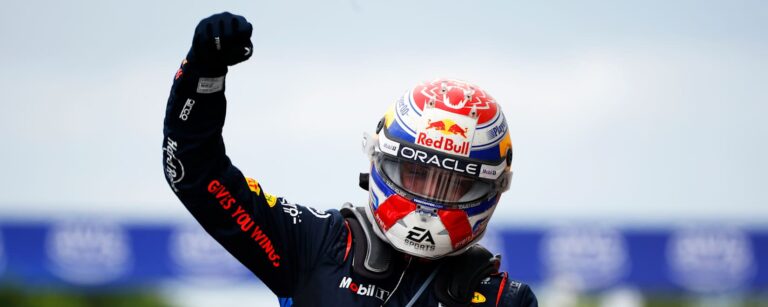
Sebastian Vettel was a four-time Formula 1 World Champion (2010–2013), the youngest champion in history at the time, and a statistical wrecking ball in Red Bull blue. At his peak, Vettel was untouchable: pole, win, fastest lap, champagne — rinse, repeat. But his story didn’t end with domination. It evolved. Because beneath the data, the finger-wagging celebrations, and the aerodynamic supremacy was something rarer:
A champion who learned how to lose, and in doing so, found his soul.
Biggest Achievements
- 4× Formula 1 World Champion – 2010, 2011, 2012, 2013 (Red Bull Racing)
- 53 Grand Prix wins, 57 poles, 122 podiums — third all-time in wins at retirement
- Youngest World Champion (23 years, 134 days) in 2010
- Most consecutive race wins in a single season (9) in 2013
- 13 wins in 2013, tying Schumacher’s single-season record
- Helped turn Red Bull Racing into a dynasty, defeating Alonso, Hamilton, Button, and Webber
- Later drove for Ferrari and Aston Martin, chasing glory and rediscovering purpose
The Dominator: Clean Lines, Cold Eyes, and the Era of Blue Fire
When Vettel arrived, he didn’t knock — he kicked the door off its hinges.
He won his first race with Toro Rosso at Monza in 2008, in the wet, in a midfield car — instantly hailed as the “Baby Schumi”. But that was just the preview. From 2010 to 2013, Vettel and Red Bull turned F1 into a Red Wedding. He wasn’t just winning — he was erasing competition. Pole on Saturday, flawless stints on Sunday, and the raised index finger (“number one”) to finish it off.
The style? Precise. Clinical. Fast enough to crush you, clean enough to deny you drama. He didn’t need elbows — he had DRS and traction maps. Critics called it boring. But ask Fernando Alonso, who fought him tooth and nail in 2012, how boring it felt to lose a title by 3 points to a guy who just never blinked.
Then came 2013. The endgame. Nine wins in a row. A season of perfect supremacy. When Vettel crossed the line in Brazil that November, he was a four-time world champion at age 26 — only Schumacher had more. And it looked like we were entering the Vettel Era.
Then the rules changed. And the world turned.
From God Mode to Grounded
- New hybrid engines. Mercedes dominance begins. Vettel, unshaven and bewildered, is outscored by new teammate Daniel Ricciardo. Red Bull’s magic evaporates. So he makes the romantic move: Ferrari.
The tifosi dream of another Schumacher. And for a while, it looks like it might happen. Vettel wins three races in 2015. Gets emotional on the podium. Cries in red. But Mercedes is a colossus, and Ferrari — well, they’re still Ferrari. Strategy errors, mechanical heartbreak, and a rising Charles Leclerc wear him down. By 2020, it’s over. No renewal. Just a press release and a goodbye.
He joins Aston Martin, not to win — but to matter. And in doing so, something shifts. The mask drops. The PR training fades. Vettel grows his hair out. Starts speaking. About climate change. About LGBTQ+ rights. About social justice. He picks up litter at Silverstone. Wears a rainbow helmet in Hungary. Plants bees. Quotes philosophers.
And suddenly, the paddock sees him not as the cold champion of yore — but as the conscience of a sport addicted to excess.
Career Summary
Vettel debuted in 2007 with BMW Sauber (replacing Kubica), scored points on debut, and was quickly picked up by Toro Rosso. His win at Monza in 2008 made him the youngest race winner at the time. Red Bull promotion followed. And from 2010–2013, the championship streak cemented him in the pantheon.
After Red Bull’s downturn post-2014, he moved to Ferrari, winning 14 races and finishing runner-up in 2017 and 2018 — both times outfoxed by Hamilton. His final years with Aston Martin saw no wins, but a clear transformation from perfectionist prodigy to paddock philosopher.
He retired at the end of 2022, in Abu Dhabi. Quietly. Gracefully. Entirely on his terms.
Legacy
Sebastian Vettel’s legacy is twofold.
To some, he’ll always be the stat monster — the kid who ruled the early 2010s with a downforce-heavy Red Bull and a ruthless grip on the sport. A German genius in the mold of Schumacher. The finger. The poles. The perfection.
But to others — and maybe to history — he’ll be remembered as the man who changed.
A champion who evolved into a human being. A driver who learned that impact isn’t always measured in trophies.
Because when the wins dried up, Vettel didn’t fade. He grew.
And that, in the end, is the rarest kind of champion of all.