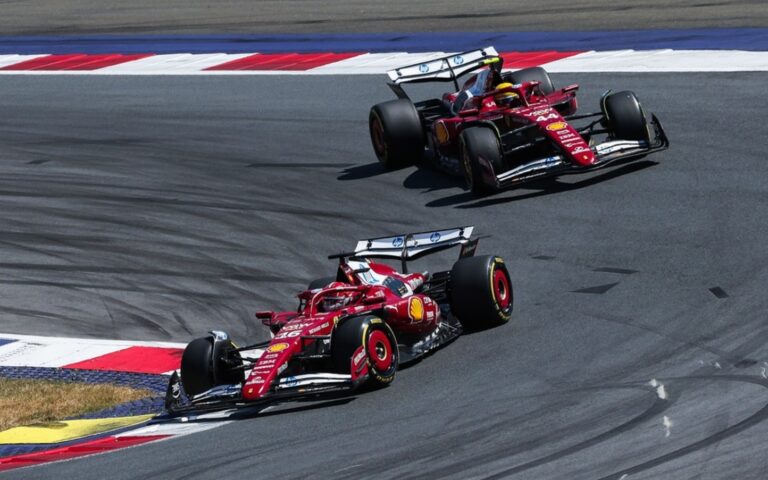
DRS (Drag Reduction System) is F1’s legal speed boost — a tool that helps drivers overtake by reducing aerodynamic drag on straights. But it comes with strict rules.
What is DRS?
A system that opens a flap in the rear wing, reducing downforce and drag. This gives the car a top speed boost of around 10–15 km/h on straights.
When can DRS be used?
- Only in DRS zones — specific track sections defined by the FIA
- Only if you’re within 1 second of the car ahead at the detection point
What is a DRS zone?
A straight or long curve where DRS is allowed. Most tracks have 2 or 3 zones, clearly marked on the circuit map.
When is DRS enabled during a race?
- From lap 2 onward
- After Safety Car restarts or VSC, DRS is re-enabled after 1 lap
Can DRS be used at any time?
No. It’s disabled in wet conditions or yellow flag zones for safety.
In qualifying and practice, drivers can use it freely on DRS zones.
Why does DRS exist?
To make overtaking easier — especially on tracks where turbulence from the car ahead makes it hard to pass.
Why do some fans dislike DRS?
Because it can lead to “easy” passes or DRS trains, where multiple cars have DRS and cancel each other out. But without it, overtaking would be much harder on modern circuits.