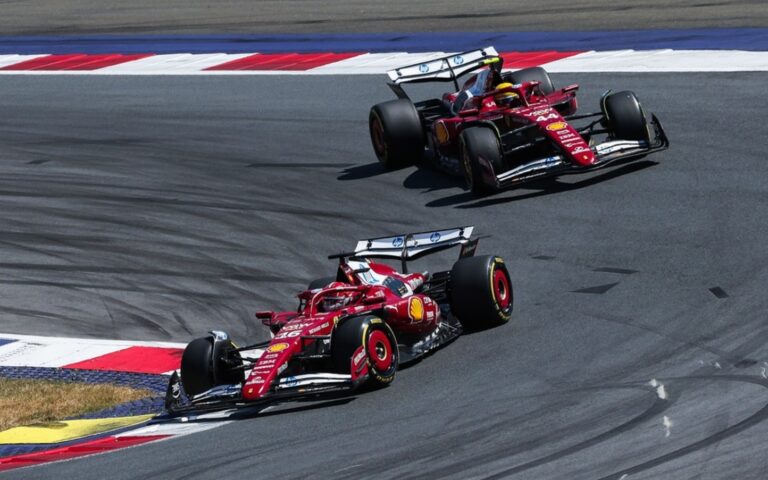
The Sprint is a short race held on select weekends, separate from the Grand Prix. It’s a standalone mini-race that brings extra points and more action — but doesn’t affect the Sunday starting grid.
What is a Sprint race?
A 100 km race held on Saturday, typically lasting 20–30 minutes. There are no pit stops required, and drivers go flat-out from start to finish.
When does the Sprint happen?
Only on Sprint weekends (around 6 per season). Format:
- Friday: Practice + Grand Prix qualifying
- Saturday: Sprint qualifying + Sprint race
- Sunday: Grand Prix
Does the Sprint set the grid for the Grand Prix?
No. Since 2023, Sprint results are completely separate. Grand Prix grid = set by Friday qualifying.
Do drivers get points in the Sprint?
Yes — but fewer than in a full race. Points go to the top 8 finishers:
- P1: 8 pts
- P2: 7 pts
- … down to
- P8: 1 pt
No bonus point for fastest lap in the Sprint.
How long is a Sprint race?
About 100 km. That’s usually 17 to 24 laps, depending on the circuit.
Are pit stops allowed?
Yes, but they’re not mandatory. Most drivers avoid stopping unless there’s damage or weather changes.
What tyres are allowed?
Any dry-weather compound. Wet and intermediates are available if needed. Teams can choose freely.
Can there be a red flag or Safety Car?
Yes — normal race rules apply. If the Sprint is stopped, restart procedures (standing or rolling) are used just like in a Grand Prix.
Why does F1 have Sprint races?
To add more racing and more risk. It gives fans a second race to enjoy and adds spice to the weekend without messing with the main event.