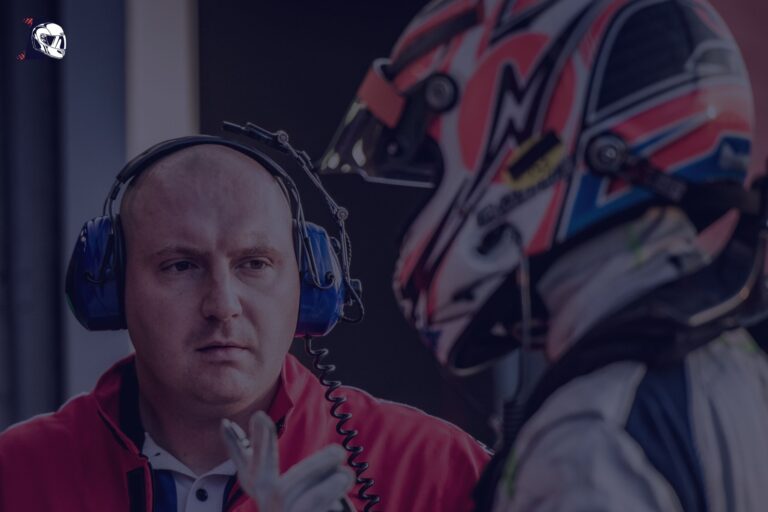
While others fought with emotion, Ross Brawn fought with spreadsheets, pit stop windows, and the quiet confidence of a man who could see five laps into the future. He didn’t chase glory. He built it — one brilliant decision at a time.
Ross Brawn (born 1954) is the strategic genius and technical director behind some of Formula 1’s most dominant eras. From Ferrari’s dream team with Schumacher, Todt, and Byrne, to his own miracle run with Brawn GP in 2009, Brawn didn’t just out-engineer the competition — he out-thought them. Calm, calculating, and lethal in a headset, he turned complexity into dominance. And later, he returned to the sport’s top level as its architect-in-chief, redesigning F1’s future from the inside out.
He didn’t raise his voice.
He just raised the bar — again and again.
Biggest Achievements
- Technical Director at Ferrari (1997–2006) during the golden Schumacher era — 6 Constructors’ titles, 5 Drivers’ titles
- Pulled off the most successful debut season in F1 history with Brawn GP in 2009 — both titles from a nearly-dead team
- Architect of countless tactical masterstrokes — famous for undercuts, surprise pit stops, and safety car wizardry
- Integral to Benetton’s success in 1994 and 1995 with Schumacher
- Played a leading role in shaping F1’s 2022 regulation overhaul as Managing Director of Motorsports
- One of few people to win titles with three different teams: Benetton, Ferrari, Brawn GP
The Role He Played – Power, Genius & Personality
Ross Brawn was never the loudest man in the garage.
He was the one doing the math while everyone else was losing their minds.
He didn’t just understand racing. He understood when to race — and when to wait. In the pressure cooker of the pit wall, he was the eye of the storm: calm, unblinking, and deadly accurate. His voice in Michael Schumacher’s ear was often the difference between chaos and a crushing win.
Brawn’s true genius was in turning strategy into domination.
– Hungary 1998: Ferrari pulls off a three-stop plan nobody saw coming. Schumacher wins. Brawn’s idea.
– Monaco 1997: rain, drama, confusion. Brawn reads the weather better than the meteorologists.
– Malaysia 1999: after Schumacher returns from injury, Brawn orchestrates the race to gift Irvine a win and keep the title dream alive.
But the defining act?
2009. Honda quits the sport in the winter. The team is dead. Staff waiting for pink slips. Brawn takes over. Rebrands it. Bolts on a double diffuser he fought to keep legal. Signs Jenson Button and Rubens Barrichello. Everyone laughs.
Then the car hits the track — and it’s a rocket.
Brawn GP wins six of the first seven races, and both titles.
From near collapse to instant legend. One season. One miracle.
It was the most Ross Brawn thing ever:
Don’t panic. Just plan better. Then win.
Life Outside the Pit Wall
After selling Brawn GP to Mercedes in 2010 (thus setting up their dynasty), Brawn stepped back. He fished. He chilled. He let the paddock go mad without him.
Then, in 2017, Liberty Media brought him back — not to run a team, but to rebuild the sport. As F1’s Managing Director of Motorsports, Brawn oversaw the 2022 technical regulation overhaul: ground effect, better racing, tighter grids. It was his final masterstroke — reshaping the game to be more about racing, less about politics.
He retired (for real this time) in 2022. The sport owes him more than it admits.
Career Summary
Brawn began in the ’70s as a machinist and aerodynamicist, rising through the ranks at Williams, Arrows, and eventually moving to Benetton. There, he formed the first part of the Schumacher–Brawn–Byrne axis, winning in ‘94 and ‘95.
In 1997, he followed Schumacher to Ferrari. With Jean Todt’s structure, Byrne’s design, and Brawn’s strategy, they turned a cursed giant into a perfect machine. Six Constructors’ titles. Five for Michael. Endless Sundays of precision domination.
He left Ferrari in 2006, took a sabbatical, then returned to a doomed Honda project that he turned into Brawn GP — the most stunning success story in F1 history.
Then came Mercedes. Then came retirement. Then came F1 itself.
Legacy
Ross Brawn is the brain behind the throne.
He wasn’t the star. He was the system.
He made winning feel logical. Methodical. Inevitable.
Drivers trusted him. Engineers followed him. Rivals feared him — because you could never outguess Brawn. By the time you reacted, he’d already won the race in his head.
In an era of noise, Ross Brawn was clarity.
In a sport of chaos, he was chess.
He’s gone now. But every time strategy wins a race,
every time a regulation creates better racing,
every time you wonder how did they think of that? —
you’re still seeing his legacy.
Because Ross Brawn never needed the spotlight.
He just needed the data —
and the right moment to strike.