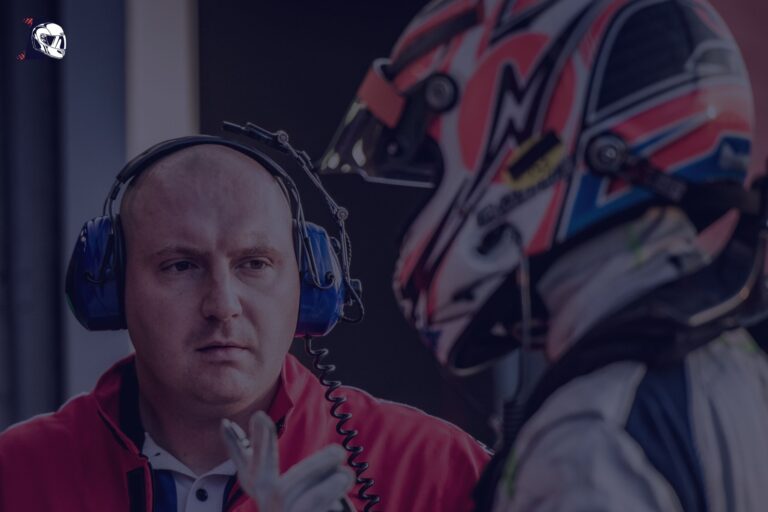
He wasn’t in the headlines. He was the guy making sure the headlines didn’t turn into lawsuits. For over two decades, Charlie Whiting was the race director, technical delegate, and moral metronome of Formula 1 — the man who started every race and ended every argument (until the next one started).
Charlie Whiting (1952–2019) was Formula 1’s race director, safety delegate, and starter from 1997 until his sudden death in 2019. He was the sport’s ultimate behind-the-scenes figure — a calm, methodical presence trusted by drivers, teams, engineers, and bosses alike. He presided over more than 400 Grands Prix, introduced the safety car as we know it, helped implement the halo, standardized track limits before they became Twitter poison, and — most of all — held the damn sport together.
He was part referee, part regulator, part babysitter to 20 millionaires in carbon shells.
Biggest Achievements
- F1’s official Race Director from 1997 to 2019
- Oversaw 400+ Grands Prix
- Introduced modern start procedures, virtual safety car, and track limit enforcement protocols
- Served as technical delegate during the turbo and refueling era of the ’80s and ’90s
- Trusted by every team and driver — from Schumacher to Hamilton — as a fair, neutral voice
- Instrumental in improving marshalling systems, circuit inspections, and race control tech
- Played a major role in the introduction of the halo safety device in 2018
- Died suddenly on the eve of the 2019 Australian Grand Prix — prompting a tidal wave of grief across the paddock
The Role He Played – Power, Genius & Personality
Charlie Whiting was not flamboyant.
He didn’t argue on camera. Didn’t storm into garages.
He wasn’t interested in politics — just procedure.
But in Formula 1, where every corner is an argument and every millisecond a battleground, that made him indispensable.
Charlie was the final word.
On safety. On starts. On penalties. On protests.
And somehow, despite sitting at the center of every conflict, he remained respected, even loved.
Drivers would storm into the FIA room after qualifying — pissed off, elbows flailing, telemetry in hand — and Charlie would raise an eyebrow, offer a calm reply, and make the issue disappear. Not by force. By trust.
He came up through the garage, not the boardroom — originally a mechanic and engineer at Hesketh and Brabham, where he worked under Gordon Murray and Bernie Ecclestone. He knew what a fast car looked like and what a dangerous one could do. That made him unique: a technocrat with grease under his nails.
He didn’t crave power. He carried it.
And when chaos unfolded — a crash, a red flag, a protest, a penalty storm — he never flinched.
He clicked the radio. Issued the call. Moved on.
One story says it all:
When Hamilton cut the chicane in Belgium 2008 and repassed Räikkönen, a protest storm erupted. The media exploded. Fans howled. But Charlie? He wrote the ruling, handed it down, and stood behind it.
Whether you agreed or not didn’t matter.
Charlie Whiting had spoken.
Life Outside the Pit Wall
Privately, Charlie was quiet, kind, and fiercely loyal. He loved motorcycles, family holidays, and obscure British cars. He wasn’t flashy — because someone in this sport had to be sane.
He died suddenly in March 2019 — just days before the Australian Grand Prix. The paddock was stunned. There was no replacement ready. How do you replace the guy who had been the voice in everyone’s ear for 20 years?
You don’t.
You scramble.
You patch the system.
And you never forget the man who held it together.
Career Summary
Charlie Whiting started as a mechanic at Hesketh Racing in the ’70s before joining Brabham under Bernie Ecclestone — where he was part of the team’s championship wins with Nelson Piquet.
In the 1980s, he became technical delegate for the FIA — overseeing legality, scrutineering, and fairness in the garage. By 1997, he was promoted to race director, and suddenly he was at the center of everything.
Start lights? Charlie’s button.
Safety car? Charlie’s call.
Track inspection? Charlie’s checklist.
Driver briefing? Charlie’s voice.
Through tech revolutions, rulebook rewrites, team mutinies, and endless debates about whether four wheels were over the white line, he was the constant.
He wasn’t loud.
He was right — or at least respected enough that it didn’t matter.
Legacy
Charlie Whiting was Formula 1’s heartbeat — steady, measured, unflashy, essential.
He didn’t make headlines. He prevented disasters.
He didn’t play politics. He built consensus.
He didn’t chase legacy. He left one anyway.
Modern race direction has fractured. Controversy has returned.
And in every debate since his passing — every missed call, every messy restart — one question lingers:
“What would Charlie have done?”
He was the quiet law of the paddock.
And the day he died, the sport lost its conscience in a headset.