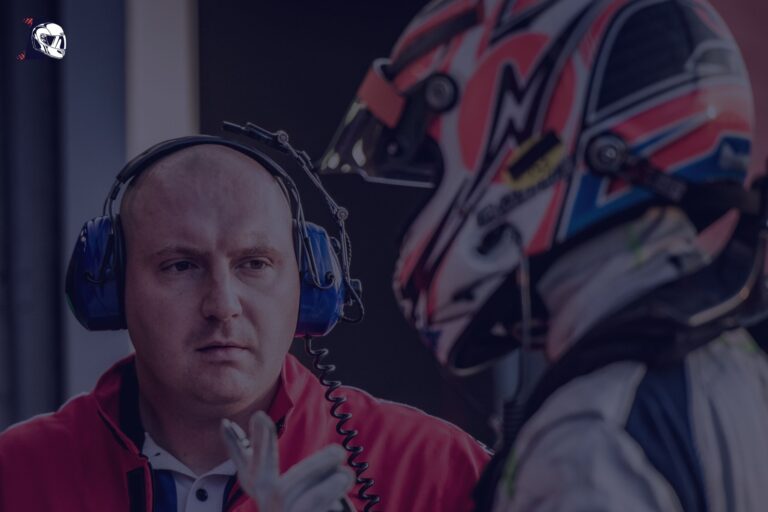
He never raised his voice, but everyone listened. In a world built on speed, ego, and high-stakes brinkmanship, Herbie Blash was the rare constant — a calm presence in the chaos, a man who didn’t need a camera or a quote to be powerful. If Charlie Whiting was the face of control, Herbie was its spine.
Herbert “Herbie” Blash (born 1948) spent more than four decades in Formula 1, most notably as Charlie Whiting’s right-hand man — serving as Deputy Race Director and FIA permanent observer. Though never a frontman, Blash was a key figure in the Brabham era under Bernie Ecclestone, and later one of the most trusted figures in FIA race control. From garage floors to global regulation, Herbie saw — and shaped — more of F1 than most team principals ever dream of.
He didn’t bark orders.
He didn’t play politics.
He just knew everything — and everyone knew he did.
Biggest Achievements
- Served as Deputy Race Director for the FIA (1995–2016), including the entire Charlie Whiting era
- Appointed FIA Permanent Observer in 2022, mentoring Eduardo Freitas and Niels Wittich
- Previously team manager at Brabham under Bernie Ecclestone and Gordon Murray during the Piquet championship years
- Involved in F1 from the 1960s — roles at RRC Walker Racing, Lotus, Brabham, and Yamaha F1
- Known as a key advisor during rule enforcement, race direction decisions, and procedural clarity
- Respected across the paddock for his encyclopedic memory, fairness, and low-ego competence
The Role He Played – Power, Genius & Personality
In Formula 1, influence usually comes with a camera flash or a quote in AutoSport.
Herbie Blash had neither.
He had a headset. A clipboard. A memory that spanned generations.
And a tone of voice that said: I’ve been here longer than your career, so listen carefully.
He was never flashy — no spectacles like Balestre, no bravado like Horner, no title ambitions. Just presence. When Herbie Blash entered the control room, the noise dropped. Because here was someone who’d seen it all — Lauda’s comeback, Senna’s fury, Schumacher’s rise, Vettel’s dominance, Hamilton’s empire — and had quietly helped navigate the rulebook through every era.
In the Brabham days, he was the glue between Bernie’s politics and Gordon Murray’s brilliance — keeping the wildest team in F1 semi-tamed and championship-calibrated. Later, under the FIA, he became the institutional memory inside race control. If Charlie was making the call, Herbie was the guy who made sure it didn’t collapse under scrutiny.
Drivers trusted him. Teams consulted him. Broadcasters quoted others — but they should’ve quoted Herbie.
When controversy hit — be it rain delays, track limit chaos, or high-stakes steward decisions — he was the voice in the background, guiding without pushing, speaking with precision and calm. Even in the white-hot aftermath of Abu Dhabi 2021, his return to FIA duty in 2022 as permanent adviser wasn’t a grab for power. It was an act of stabilisation.
Because when F1 loses its plot, Herbie helps it find the thread again.
Life Outside the Pit Wall
Away from the track, Herbie Blash kept a characteristically low profile. No tell-all memoirs. No media circuits. Just a private life rooted in the UK, the occasional paddock reappearance, and an enduring loyalty to the sport that shaped his life — and which, quietly, he helped shape in return.
Career Summary
Herbie entered Formula 1 in the late 1960s with Rob Walker Racing, before joining Lotus during the Clark and Hill years. He then moved to Brabham, where his real legend began — rising from mechanic to team manager, handling Nelson Piquet’s world titles and the turbo chaos of the 1980s with unmatched composure.
After Brabham, he worked with Yamaha’s F1 program, before being brought into the FIA orbit by Charlie Whiting. From the mid-1990s to 2016, Herbie was the ever-present deputy in race control, helping refine race direction, marshal coordination, and stewarding consistency. In 2022, amid growing need for experience post-Masi, Herbie was called back in — not to rule, but to steady.
Legacy
Herbie Blash is the last of a vanishing breed — a figure who spans the garagista days and the hybrid era, the Brabham underdogs and the Mercedes juggernaut, the analog chaos and the digital scrutiny.
He represents quiet power, hard-won respect, and institutional sanity.
His legacy is written in clean restarts, rational penalties, and the unspoken truth that someone in the room always knew what really happened — and what really mattered.
F1 has had louder voices.
But when Herbie Blash spoke, people listened.
Because behind every good call, there’s a voice of reason.
And for decades, that voice was his.