They don’t just shout corners. They don’t just flip pages. They’re part-oracle, part-surgeon, part-psychologist in a fireproof suit. In rally and rally raid, the co-driver isn’t a passenger. They’re the one thing standing between you and oblivion.
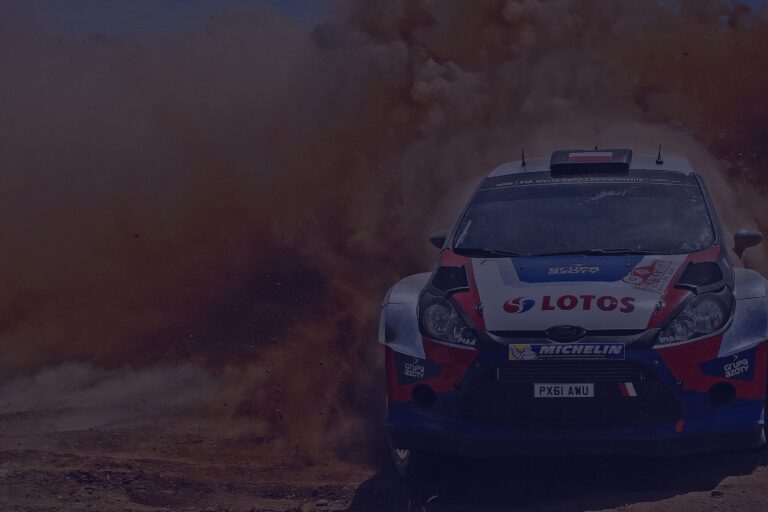
The car is flying.
Dust everywhere.
Trees flick past like gunshots.
You’re flat-out in fifth, trusting a voice next to you that says:
“Left six over crest, tightens to four, don’t cut — 150.”
You don’t question it. You don’t lift.
Because if you doubt them, you die.
They Read the Future at 180 km/h
Co-drivers don’t look at the road.
They look at the map of the road before it happens.
They sit in the right seat, helmeted, harnessed, bouncing like popcorn in a tin can, flipping through pace notes like a symphony conductor at full tilt.
They translate terror into tempo.
Each note? A coded prophecy.
– “4 left into 3 right, over crest, 50.”
– “Caution jump into narrow bridge, 100 tight hairpin.”
– “Danger! Drop right!”
They are navigators, yes. But also:
– rhythm keepers,
– minds under pressure,
– human black boxes who can restart a driver’s confidence mid-stage with nothing but tone and timing.
In Rally Raid, They’re Literally Finding the Race
In WRC, pace notes are written in reconnaissance.
But in Dakar and other cross-country rallies?
There are no track walks. No practice laps.
Just a roadbook. A compass. And a prayer.
Your co-driver isn’t just calling turns — they’re decoding the unknown in real time.
Looking for landmarks. Squinting at dunes. Reading cap headings and GPS markers like their life (and yours) depends on it — because it does.
One wrong call?
You’re lost in the desert.
Or off a cliff.
Or cartwheeling a million-dollar machine into a canyon.
They Don’t Get the Glory — But They Take All the Risk
When a car crashes in rally, the co-driver crashes too.
Same G-forces. Same fire risk. Same rollcage coffin.
But when a team wins?
It’s the driver on the headline. The co-driver maybe gets a name-drop — if they’re lucky.
Even though they:
– wrote the notes,
– refined them over hours of recce,
– memorized danger zones,
– called the perfect split-second timing in fog, rain, or snow,
– and somehow kept calm while barreling toward a cliff edge at 170 km/h.
This is not a sidekick job.
This is 50% of the mission.
They Save Races — And Sometimes They Save Lives
Ask Colin McRae what Nicky Grist meant to him.
Ask Sébastien Ogier what he’d do without Julien Ingrassia.
Ask Carlos Sainz Sr. what it felt like to be upside down in the dunes with Lucas Cruz trying to crawl out and radio for help.
There are co-drivers who’ve pulled unconscious drivers from wrecks.
Who’ve kept talking through broken ribs.
Who’ve navigated their way back into the top ten after getting completely lost in the desert for hours.
They don’t just save seconds.
They save everything.
Final Time Control
You can have the fastest driver in the world —
but without a great co-driver, they’re a rocket with no guidance.
The co-driver is the brain to the driver’s nerve.
The calm in the panic.
The voice that cuts through the chaos.
So the next time you watch a rally car soar off a crest and land clean into a hairpin like it was scripted by God —
remember:
Someone called that.
Someone read that future.
Someone sat in that seat and didn’t flinch.
They are not passengers.
They are warriors in the right seat.