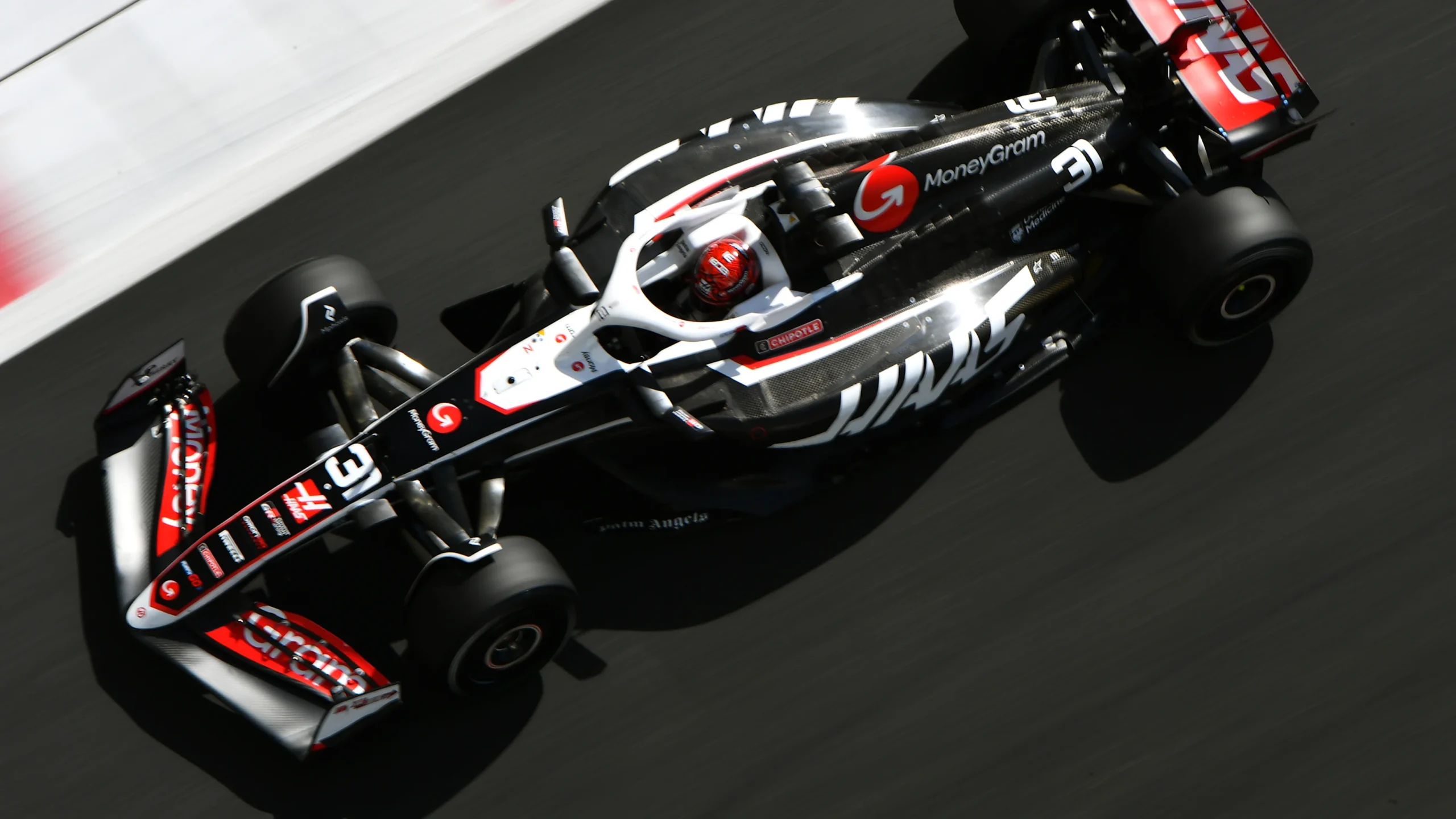

That wooden-looking strip under a Formula 1 car isn’t decoration — it’s one of the most important (and most scrutinised) pieces of the car. It’s called the skid block, or more casually, the “plank.”
What it is
- A rectangular strip that runs down the centre of the car’s floor.
- Made of a composite material called Jabroc — layers of beechwood veneer bonded with resin.
- First introduced in 1994 after Ayrton Senna’s fatal crash at Imola, as part of a package of new safety rules.
What it does
- Ensures cars run at a safe minimum ride height — if the plank wears down too much, it means the car was running too low.
- Protects the carbon fibre floor from damage when the car bottoms out at high speed.
- Acts as a simple but brutally effective way for the FIA to police legality: more than 1 mm of wear, and you’re disqualified.
Famous example
Michael Schumacher lost his second-place finish at the 1994 Belgian GP because post-race checks showed excessive plank wear — proof he’d been running the car illegally low.
The drivertalk take
It looks like a piece of plywood, but it can decide championships. The skid block is a reminder that in F1, the smallest, simplest parts can carry the weight of the rules. You can have a $15 million car — if your plank’s too thin, you’re going home with zero points.