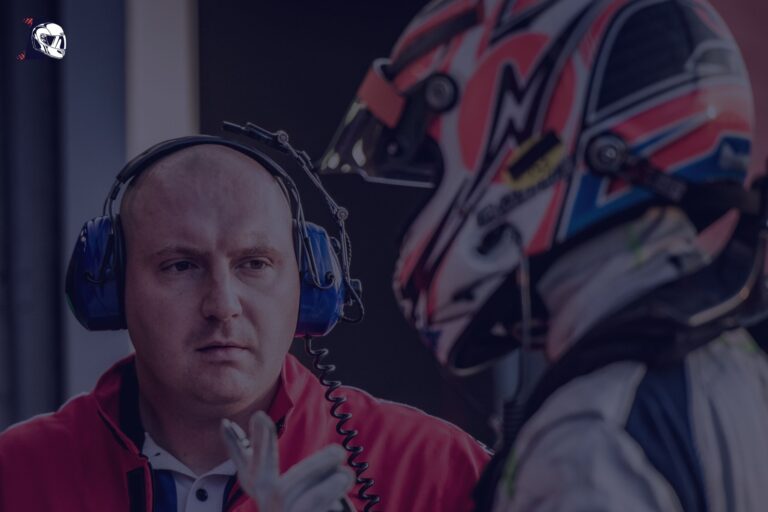
He didn’t smile much. He didn’t blink often. But he built a team that tore through the paddock like a disciplined army with V10s for bayonets.
Sir Frank Williams (1942–2021) was the founder and longtime team principal of Williams Grand Prix Engineering — a no-nonsense, overachieving, underdog-turned-titan that won nine Constructors’ Championships and seven Drivers’ titles. From the late 1970s through the early 2000s, Williams was a pit lane general: cold, driven, unsentimental — and utterly obsessed with winning. He didn’t care about personalities. He cared about performance. If Enzo Ferrari ruled by myth and Ron Dennis by method, Frank Williams ruled by willpower. A man in a wheelchair, building rockets faster than anyone else on the grid.
His cars didn’t love you back. But they would win you titles.
Until they didn’t.
Biggest Achievements
- Founded Williams Grand Prix Engineering in 1977 with Patrick Head
- Led the team to 9 Constructors’ Championships and 7 Drivers’ titles (Alan Jones, Keke Rosberg, Nelson Piquet, Nigel Mansell, Alain Prost, Damon Hill, Jacques Villeneuve)
- Created the last great independent team to dominate Formula 1 without a full manufacturer backing
- Hired technical wizards like Adrian Newey and forged legendary engine partnerships (Honda, Renault)
- Survived a near-fatal car crash in 1986 that left him tetraplegic — returned to the paddock within months
- Oversaw iconic cars like the FW14B and FW18 — arguably the most dominant F1 machines ever built
- Famously let champions walk if they weren’t aligned with the team — no driver was bigger than the badge
The Role He Played – Power, Genius & Personality
Frank Williams was a paradox in motion — a man physically confined, yet utterly unrestrained in his ambition. His power wasn’t theatrical or suave. It was in the stare. The silence. The refusal to flinch when everything around him burned.
He didn’t do emotions. He did lap times.
If you wanted a hug, go to McLaren. If you wanted a title, get in the Williams.
He ran his team like a military outpost — focused, hierarchical, merciless. Loyalty wasn’t given, it was assumed. Success wasn’t rewarded with celebration, it was followed by: “Do it again.”
The defining moment? His refusal to re-sign Nigel Mansell in 1992 — after Mansell had just crushed the season and won the title. Why? Because Frank had already made a deal with Alain Prost. He wanted control. He wanted leverage. He didn’t want emotion muddying the data.
That ruthlessness worked — until it didn’t. The team became so tightly wound, so devoid of star-driven drama, that it began to lose the plot in a sport shifting toward marketing, personality, and manufacturer muscle.
But at his peak?
Frank Williams built machines. And teams that made machines.
In an age of flashy superstars, Williams reminded the paddock that discipline wins.
That engineering can still be beautiful.
That a man in a wheelchair can lead a war — and win it.
Life Outside the Pit Wall
There wasn’t much of it.
Frank Williams was Williams. The team bore his name, his work ethic, his damn near religious belief in meritocracy. After his 1986 car crash, doctors didn’t expect him to live. He proved them wrong. Then he came back to the track and beat them all.
He didn’t chase celebrity. He didn’t do headlines. But he did accept a knighthood — one of the few times he allowed the world to recognize how titanic his contribution had been.
He died in 2021. The sport paused. Not for nostalgia. For respect.
Career Summary
Frank’s first stab at F1 in the early ’70s — Frank Williams Racing Cars — was underfunded, overstretched, and chaotic. He sold the team to Walter Wolf in 1976. A year later, he started again — this time with Patrick Head, a brilliant engineer who didn’t suffer fools.
By 1979, Williams had won its first race. By 1980, it had its first world title with Alan Jones. What followed was a machine-like ascent: Rosberg in ‘82, Piquet in ‘87, Mansell in ‘92, Prost in ‘93, Hill in ‘96, Villeneuve in ‘97.
Williams became the benchmark of F1 efficiency — dominating with aero mastery, technical daring, and driver expendability. If someone asked what the team was about, the answer was simple: the car.
But as the sport evolved — with manufacturer teams, big money, and marketing flash — Williams began to fade. BMW came and went. Newey left. Montoya flashed, but didn’t deliver. By the late 2000s, the team was a shadow of itself.
Still, Frank remained.
Until finally, in 2020, the family sold the team.
Legacy
Frank Williams represents the soul of independent F1. The raw, unsponsored, unfiltered belief that engineering and grit can still beat money and myth.
He showed the world that victory didn’t require charm. That greatness could be built in a garage, refined in a wind tunnel, and driven by pure, remorseless will.
Every time a small team overachieves — every time an underdog outsmarts a giant — that’s Frank.
And every time a team puts the car above the superstar, the system above the ego — that’s Frank, too.
He was tough. He was distant.
But he made a team that couldn’t be ignored.
And in the end, he turned machinery into legend.