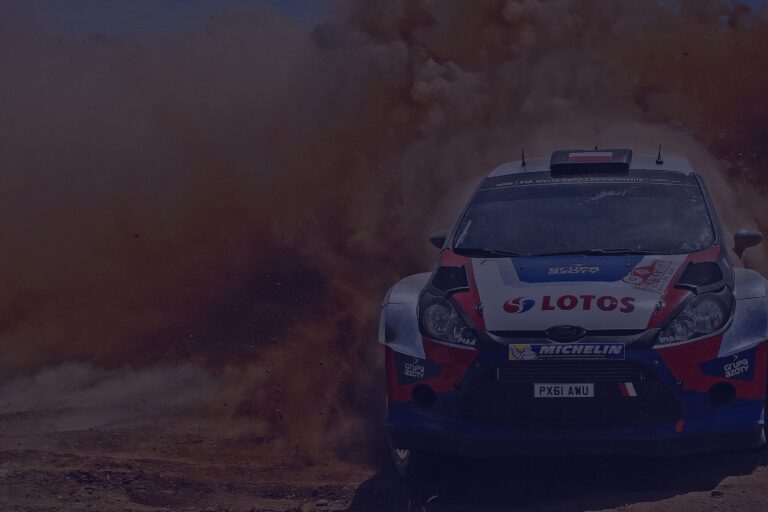
Forget Monaco. Forget Spa. Even forget Le Mans. The Dakar doesn’t care how many followers you have or how much wind tunnel time you’ve banked. It cares whether you can survive ten days in the most hostile terrain on Earth — sleep-deprived, sunburnt, and one dune away from disaster.
You want to talk about hard?
Try crashing 300 km into the Saudi desert with a broken axle, one bottle of water, and 200 kilometers left to drive — in the dark.
Try waking up at 3:00 a.m. for a ten-hour stage where the route isn’t just unknown — it’s unmarked.
Try fixing your bike with zip ties and hope.
Try navigating with a codriver screaming “cap 275!” while the sun blinds you and the rear end fishtails through silt.
Because Dakar isn’t just a rally.
It’s a war of attrition wrapped in a mirage.
It’s motorsport stripped of glamour and ego. And it is still, undeniably, the most savage test the sport has to offer.
The Rally That Forgot to Be Reasonable
The Dakar Rally doesn’t play by your rules.
It’s not run on closed circuits.
It’s not about perfect lines and tenths of a second.
It’s about not dying in the middle of nowhere with nothing but sand, salt, and satellite signals between you and the next bivouac.
The vehicles? Trucks the size of buildings, SSVs that bounce like pinballs, bikes that break bones in seconds.
The distances? Often over 800 km a day.
The navigation? Old-school. Roadbooks. Compasses. Instinct.
If your navigator blinks, you’re lost — not in the “wrong line at Monza” sense, but in the “congratulations, you’re in the wrong valley and no one can hear you scream” sense.
This Race Doesn’t Care Who You Are
Carlos Sainz? Gets stuck for hours in the dunes.
Seb Loeb? Breaks his suspension in the rocks.
Toby Price? Gets concussed, tapes his helmet back together, and keeps riding.
No one — not WRC champions, not Moto legends, not even factory teams with armies of mechanics — is safe.
Dakar has a way of equalizing the arrogant.
Because out here, talent isn’t enough.
You need pain tolerance. You need luck.
You need to be able to drive 300 km/h on sand while hallucinating from exhaustion.
And even then, you might still lose.
The Real Opponent Isn’t the Clock — It’s the Planet
Every stage of Dakar feels like an act of geological aggression.
Dunes the size of skyscrapers.
Canyons so narrow you have to fold your mirrors.
Salt flats that cook engines alive.
Sudden rainstorms that turn dry valleys into death traps.
It’s not just technical. It’s elemental.
The Earth is actively trying to swallow your rally car.
And when it does, there’s no marshal waving a yellow flag.
You get out. You dig. You bleed. You keep going.
It’s the One Race That Feels Like Real Adventure
Motorsport is obsessed with control. With simulation. With precision.
But Dakar is messy. Brutal. Romantic in the old, dangerous way.
The bivouacs are cities of dust and diesel.
Mechanics rebuild entire suspensions by flashlight.
Riders sleep in tents with IV bags nearby.
You share tools. You share water. You share silence — because you’re all just trying to make it to tomorrow.
This isn’t Drive to Survive.
This is drive to stay alive.
Final Stage
We sanitize racing now.
We market it. We edit it into storylines.
We love the rivalries and the team radios and the TikToks.
But Dakar?
It doesn’t need a narrative arc.
It doesn’t need a Netflix crew.
It just needs one desert, one machine, and one insane, unkillable human being willing to throw themselves into the void.
Because long after the champagne dries in Monaco…
Long after the lights go out in Vegas…
The Dakar Rally remains what it’s always been:
the hardest, harshest, most heroic race in the world.