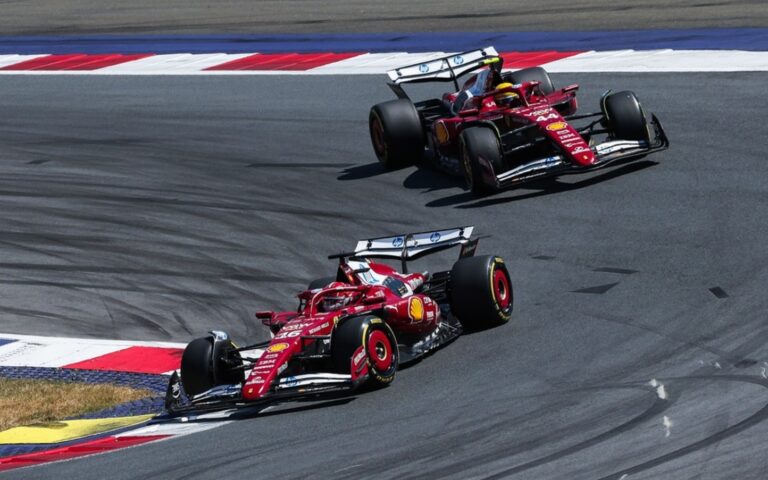
In F1, the rule is simple: stay within the white lines. Go beyond them too often, and you’re asking for trouble — even if it’s just a few centimeters.
What are track limits?
The white lines define the edge of the track. A car is considered off-track if all four wheels go over the line.
Can drivers go wide sometimes?
Yes — but not repeatedly. If you gain a lasting advantage, you’ll get warned or penalized.
What’s the penalty for track limits?
It’s a step system:
- 1st–2nd time: no action
- 3rd time: black-and-white warning flag
- 4th time: 5-second time penalty
More violations = more penalties.
What counts as “gaining an advantage”?
- Gaining/loss-avoiding time
- Keeping a position
- Unsafe re-entry
Even unintentional gains can result in penalties.
Are the rules the same in qualifying?
Yes — any lap time set off-track is deleted immediately. No exceptions.
Can track limits be ignored during overtakes?
No. If you overtake off the track, you must give the place back — or face a penalty.
How is it enforced?
FIA uses GPS, timing loops, and cameras. Some corners are closely monitored, others not — depends on the circuit.
Why are fans frustrated by track limits?
Because enforcement can feel inconsistent, and tiny mistakes can ruin great laps or races. But the rule? It’s clear: white line = edge of track.