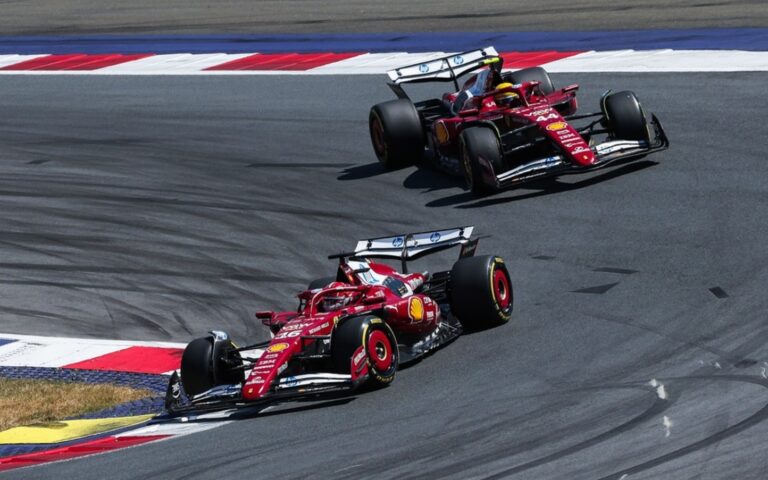
Undercut and overcut are two key race strategies involving the timing of pit stops. It’s all about gaining track position by pitting at the right moment — before or after your rival.
What is an undercut?
The undercut is when a driver pits earlier than the car ahead, puts on fresh tyres, and uses that speed advantage to leapfrog them once they pit.
Fresh rubber = faster laps
Rival stays out = slower laps
You gain time = position swapped
What is an overcut?
The overcut is the opposite. A driver stays out longer, hoping their pace on worn tyres is still fast enough to jump ahead when the rival pits first.
It works when:
- Your tyres still have life
- The pit lane is busy
- Or the undercut isn’t strong at that track
Which strategy is better?
It depends on:
- Tyre degradation
- Track layout (how hard it is to overtake)
- Traffic after the pit stop
- Undercut strength (some tracks = powerful, others = useless)
How do fresh tyres make the undercut work?
New tyres can be 2+ seconds per lap faster than old ones. Even one lap on new rubber can swing a battle.
How do teams decide?
They watch lap times, gaps, and traffic maps constantly. One wrong pit call can cost multiple positions.
Why are undercuts risky?
You might:
- Come out in traffic
- Burn your tyres too early
- Force a longer second stint
Same for overcuts — stay out too long, and your pace drops off a cliff.